Rabaris - The Nomads of Kutch Gujarat
Discover the history, lifestyle, attire, pastoralism and indigenous knowledge of the Rabari community from Western India
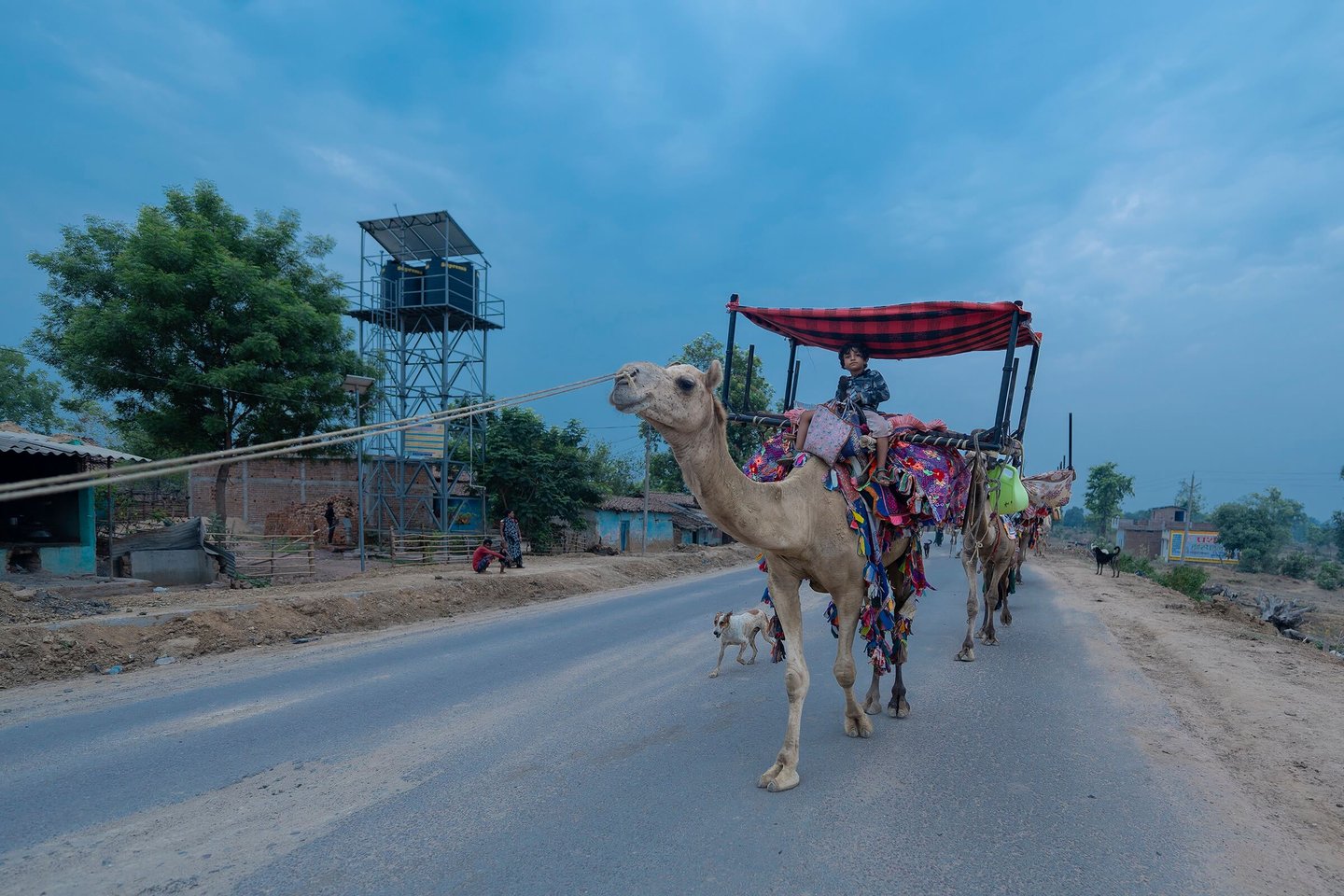
The Nomadic Tribe - Rabaris
Vanishing Migration Routes
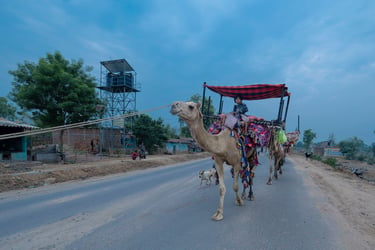
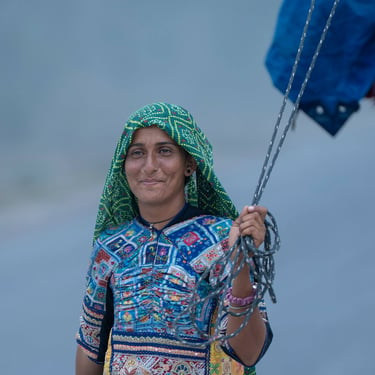
On my way from Raipur to Bandhavgarh, I came across this nomadic pastoral community traveling to their homeland Kutch, Gujarat.
For generations, the Rabaris have navigated the grazing grounds, followed rainfall patterns, and moved seasonally with their camels, goats, sheep and cattle. Their livelihood is built on mobility and their wealth is counted in livestock.
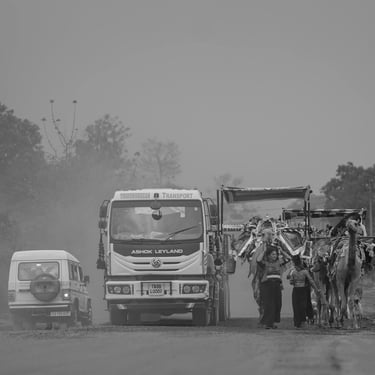
In search of grazing lands they travel hundreds of kilometres between, Gujarat, Rajasthan, Madhya Pradesh and Chhattisgarh. But today, the migration routes are paved, diverted due to private farms, and urbanization. This enforces them to walk along busy roads, covering longer distances for less forage. Plus, the climate that once directed their entire year mobility has now become harsh and unpredictable.

FAQs
Who are Rabaris?
Mythology says Shiva created a man named Sambad – the first Rabari to watch and take care of a camel shaped from clay by Parvati. Whereas historians trace their roots from Iran or Baluchistan. And between 4th to 14th century migrated to arid terrains of western India – Sindh, Kutch, Saurashtra, and Marwar. They are also referred as Raika, Desai, Rewari or ra-bahar which translates to ‘those who live outside or outsiders’
Initially they were camel breeders and later expanded into raising various livestock. In the past they were completely nomads but nowadays they are semi-nomads, moving according to season, even some had abandoned this lifestyle for a modern life.
What is their traditional Attire & Craft?
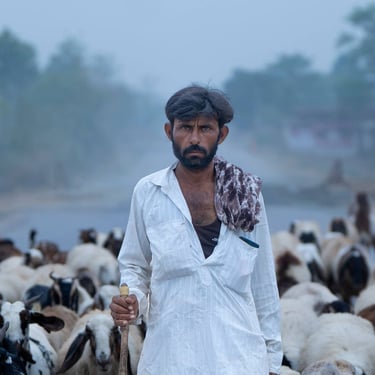
The Rabari men wear white coloured kediya or kediyu tunics (made of cotton) along with a pagari or turban (white or bright red colour) while women wear kapdu (blouse), ghaghro (skirt) and chundari (scarf) to cover their heads. The women embroidery features detailed mirror work, and bold geometric shapes.
References:
Sahapedia, Google Arts & Culture (Hansiba Museum), Indira Gandhi National Centre for the Arts (IGNCA), Gaatha, Asia InCH, India Development Review (IDR), Mongabay India
Why their Knowledge matters?
For generations the Rabaris have preserved and passed down their indigenous ecological knowledge. Living close with nature they have a deep understanding of seasonal grazing patterns, native trees, shrubs, edible grasses, medicinal plants, early signs of drought, and livestock behaviour. Their observations can also play a vital role in developing effective climate adaptation and resilience strategies.